In Search of a Homeland
Through the Jalbert family's journey from Quebec to northern Maine, this essay explores the Acadian and Québécois migrations that shaped the upper St. John Valley—and the struggle to preserve a cultural history in danger of being forgotten.

Two Migrations, One Homeland: Acadians, Québécois, and the Upper St. John Valley.
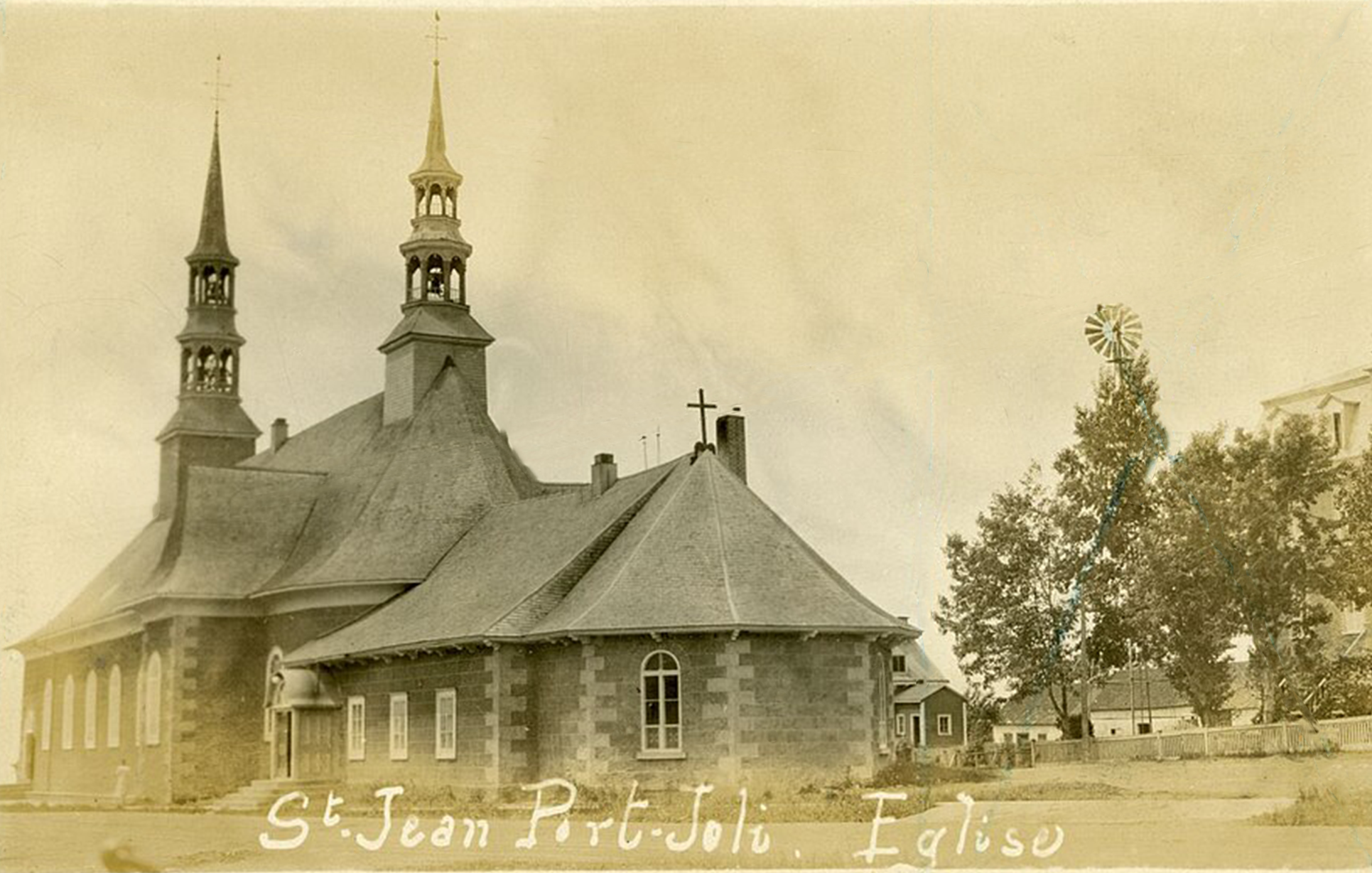
The church still stands. The farms are gone.
Église Saint-Jean-Port-Joli is among the few surviving witnesses to the world my ancestors knew before leaving Québec nearly two hundred years ago.
The farms where they lived have disappeared. Their houses are gone, their fields absorbed into the changing landscape.
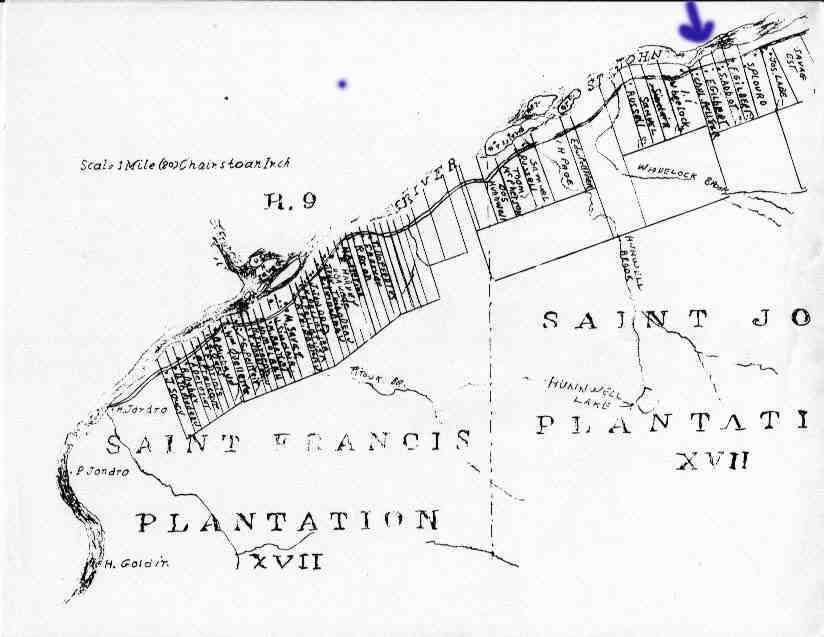
Of the riverside farm my great-great-grandparents established along the St. John River in northern Maine, the only physical evidence is an old survey map, its narrow parcels marked with names that outlived the families who cleared them.
It is a small distinction, perhaps, in the long history of a continent. But the disappearance of these places raises a larger question: how does a people remember where they came from when so little of the world their ancestors inhabited survives?
The history of French-speaking North America is filled with disappearances from historical neglect and outright erasure.
For centuries, families migrated along the St. Lawrence River, across its tributaries and portages, into the forests of the upper St. John River Valley. Families left the emotional and spiritual security of everything familiar--land, family, church, neighbors—out of economic necessity: the land could no longer support another generation. They carried their language, religion, customs, and kinship into unfamiliar country towards the promise of economic freedom and independence, where the work of building a home began again.
Their stories rarely entered the historical record except as names in parish registers, land deeds, censuses, and surveys. What they endured, what they hoped for, and what they believed they were leaving behind seldom survived.
In 1847, Henry Wadsworth Longfellow published Evangeline: A Tale of Acadie, transforming the British ethnic cleansing of the Acadians, beginning in 1755, into one of North America's most enduring literary legends. Through the story of two lovers separated by deportation, Longfellow gave a displaced people a narrative of loss, fidelity, and longing for a vanished homeland.
For generations, Evangeline became one of the most recognizable literary expressions of the French-speaking experience in North America. Although rooted in the Acadian deportation rather than the later migrations of Quebec families, its themes of displacement and the search for home resonated far beyond Acadie.
Yet the sentimental love story obscures as much as it reveals. The British ethnic cleansing of the Acadians during Le Grand Dérangement was an horrific campaign of forced removal that destroyed established communities, seized farms, and scattered families throughout the Colonies, Caribbean, England, and France. More than a thousand deportees, emprisoned for months in windowless holds so cramped they could barely sit up, drowned when transport ships sank .
During the winter of 1759, New England mercenaries ransacked and burned Sainte-Anne-des-Pays-Bas, near present-day Fredericton. In refugee camps along the Miramichi River, famine left mothers so malnourished that every newborn infant died.
That history deserves a fuller telling than I can give it here.
What concerns me is how two distinct migrations—the Acadians uprooted by British conquest and the Québécois who later left the increasingly crowded agricultural parishes along the St. Lawrence—converged in the upper St. John River Valley.
Their histories differed, and their reasons for leaving were profoundly different. Yet together they helped establish the French-speaking communities of northern Maine and neighboring New Brunswick.
Reducing these separate histories to a single origin story, shaped by the romantic imagination of an Anglo-American poet, obscures the very experiences that gave these communities their character: dispossession, migration, the struggle for land and livelihood, and the determination, grit, and resolve to preserve a language and culture across generations.
These were not entirely separate peoples entering an empty land. Acadian refugees had established family and cultural ties with French Canadians in Québec, connections that would influence subsequent settlement. Nor was the St. John Valley uninhabited. The Wolastoqiyik had occupied and traveled its waterways long before European arrival. What emerged along the upper river was a distinctive French-speaking society, shaped by Acadian displacement, Québécois migration, intermarriage, Catholic parish life, farming, and the lumber economy.
The history of that settlement is much larger than any one family. Yet much of it survives only in fragments—church records, government surveys, land claims, and stories passed from one generation to another.
My family's history is a small part of that larger story. I tell it not because the Jalberts were exceptional, but because they were ordinary migrants. Their migration from one settlement to another, their search for land and a livelihood, and the gradual disappearance of nearly everything they built reflect the experiences of countless families whose stories have been lost.
Their journey offers one way of reconstructing the migration of a people and the cultural inheritance they carried into the forests of the upper St. John.
Édouard and Lucie Jalbert were born in Saint-Jean-Port-Joli, a farming parish on the south shore of the St. Lawrence River. They married there in 1827, then moved east to Rivière-du-Loup, where their first daughter, Seconde Marie-Radigonde, was born in 1829. Four more children followed.
Why they left their home parish is unknown. By the early nineteenth century, however, the older settlements along the St. Lawrence were experiencing growing pressure on available farmland. Large families, established patterns of inheritance, and the scarcity of affordable agricultural land sent younger generations toward developing settlements where they might acquire property and establish independent households.
Rivière-du-Loup was one such place. Its sawmills, timber trade, and surrounding agricultural lands offered opportunities that were becoming difficult to obtain in the older parishes.
But after roughly a decade, Édouard and Lucie moved again.
In 1839, with five children, they left Rivière-du-Loup for the upper St. John River Valley, undertaking a journey through the rugged forested highlands between the St. Lawrence and what is now northern Maine.
Their likely route followed the Grand Portage, an ancient Indigenous corridor connecting the St. Lawrence to Lake Témiscouata and the Madawaska River. From there, they could descend by boat to the St. John and continue upstream toward the French-speaking farming settlements west of present-day Fort Kent.
We have a remarkable contemporary account of the journey.
In August 1837, two years before the Jalberts established their farm, geologist Charles T. Jackson traveled the Grand Portage while surveying Maine's public lands. He described a rough road climbing steep hills and crossing swamps where horses struggled to pull their loads. Along the way, he encountered emigrant families from Québec, their furniture and possessions piled onto horse-drawn carts.
It is possible to imagine Édouard and Lucie among them, although no record establishes precisely when or how they traveled. Five children, household necessities, whatever tools and possessions their horse or oxen could haul in a cart, and the prospect of another farm waiting somewhere beyond the forest.
The Jalberts settled in St. John Plantation, west of Fort Kent, a culturally mixed settlement of Québécois and Acadien French-Catholics and Irish-Protestants from New Brunswick and the Kennebec River Valley.
Their arrival coincided with the Aroostook boundary crisis of 1839, when British and American forces were about to go to war over the disputed boundary. Governor Kent sent a militia north to build a road and blockhouse at the confluence of the St. John and Fish Rivers. Fort Kent was named in his honor. The Webster–Ashburton Treaty of 1842 established the St. John River as the geographic boundary.
An 1844 land-claims record misspells my great-great-grandfather's name--Edward Gilbert. His holding comprised 148.12 acres, only six of which had been cleared when the commissioners recorded the property.
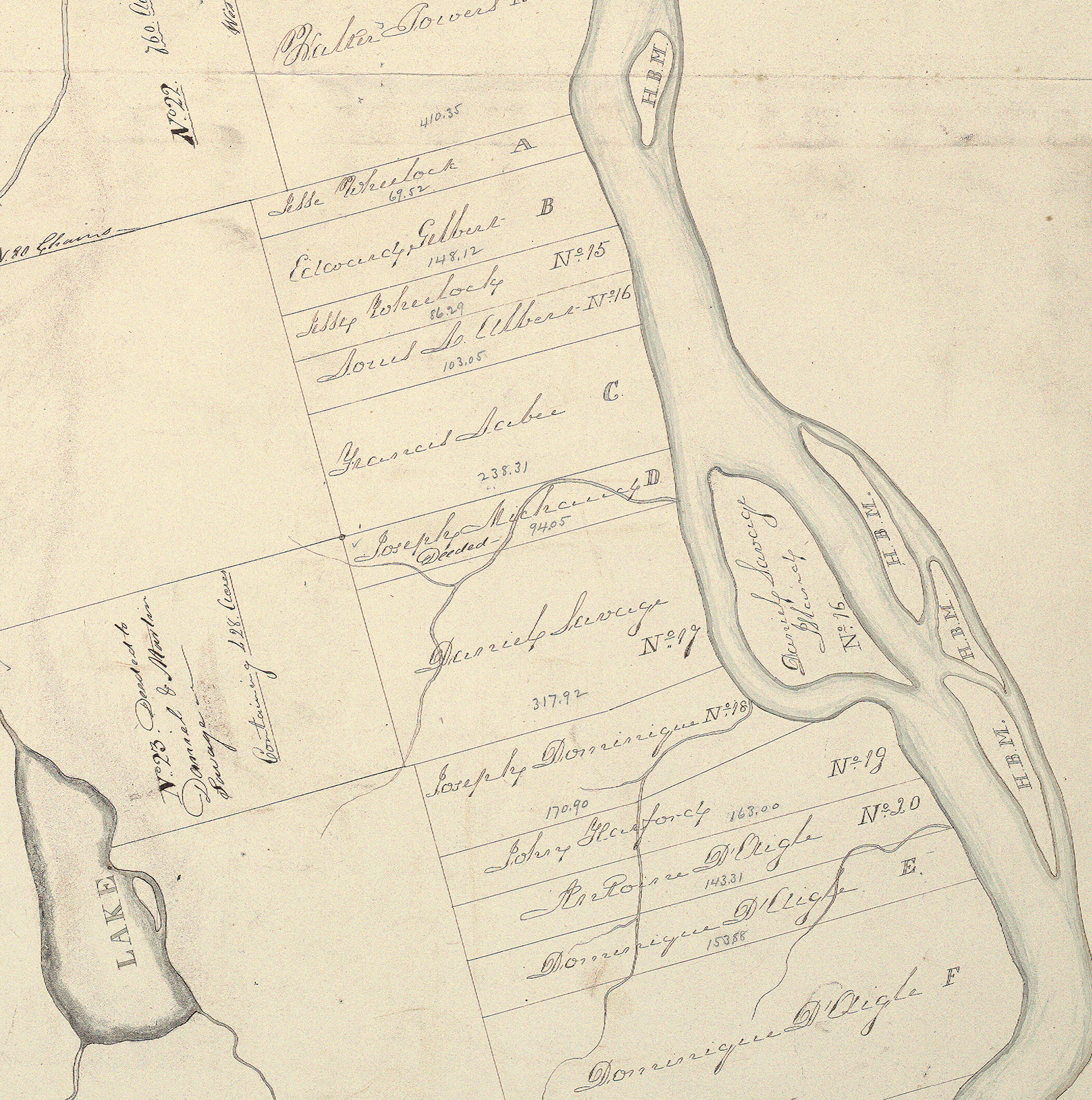
The documentary record is slender for such a considerable undertaking: a family of five, eventually swelling to fifteen, establishing itself on a small clearing surrounded by more than a hundred acres of forest.
In the following generation, Édouard and Lucie's son Joseph married Helen Russell, daughter of their neighbor Samuel Russell. In 1870, the couple moved farther into the northern Maine interior, to a farm above Allagash Falls. Joseph's brother, Fleurent, and his family had settled there ten years earlier. Helen's sister, Susan Russell McClellan, gave the couple 160 acres.
In little more than forty years, the Jalberts migrated from Quebec's agricultural parishes to the remote upper reaches of the Allagash River.
Their migration was part of a much larger movement of people seeking land, economic independence, and the possibility of making a permanent home. Yet permanence proved elusive. Farms disappeared. Buildings collapsed. Fields returned to forest. Generations passed, and the people who had once occupied those places slipped from living memory.
I grew up in Fort Kent and spent my summers on the Allagash River, at Jalberts Allagash Camps on Round Pond, immersed in my family's four-generation legacy of farming, trapping, guiding, and logging along the river.
To a boy, the river and its surrounding wilderness seemed ancient and immutable, a country that had always existed beyond the reach of ordinary history. Family stories reinforced that illusion. The men who came before me seemed to belong to the river as naturally as the woods and water.
Only much later did I begin to understand how recently my ancestors had arrived, how much of what I considered a family inheritance had been created through successive migrations, and how little remained of the lives that made my own possible.
Perhaps that is why Evangeline continues to matter. Its historical reach is limited, and its romance cannot contain the epic odyssey of Acadian and Québécois migrations. But literature sometimes preserves what buildings, farms, and official records cannot: a people's sense of having lost a home and the longing to recover it, if only through memory.
For my family, there is no comparable epic. A church still stands in Quebec, a survey map of farms along the St. John, a handful of names in parish registers and government records, and stories passed down through generations that are now disappearing.
And that is the larger loss. Not simply the disappearance of the Jalberts or any other family from the historical record, but the gradual erasure of the lives of ordinary people whose labor, language, and traditions gave the upper St. John Valley its cultural identity.
The importance of history lies not in preserving the reputations of our ancestors, but in recovering the world they inhabited. The Jalberts were neither the first nor the last families to seek a homeland in the upper St. John Valley. Their journey was one of thousands, largely unremarkable except for the traces that survive.
Yet taken together, these ordinary lives tell a story far greater than any one family: how a people carried their language, faith, and customs across generations and borders, how they made a home in unfamiliar country, and how easily their experience can disappear when no one remains to remember it.
History matters because forgetting is not neutral.
When a family's farm disappears, its absence may seem inconsequential. When thousands of farms disappear, when names are altered, languages outlawed and suppressed, when the dominant culture makes ethnic cultures ashamed of themselves, when the stories of ordinary people are omitted from the public record, something much greater is lost.
Not just knowledge of the past, but the ability of descendants to understand how they came to belong where they do.